Dental Laser Technology
Dental Laser Technology
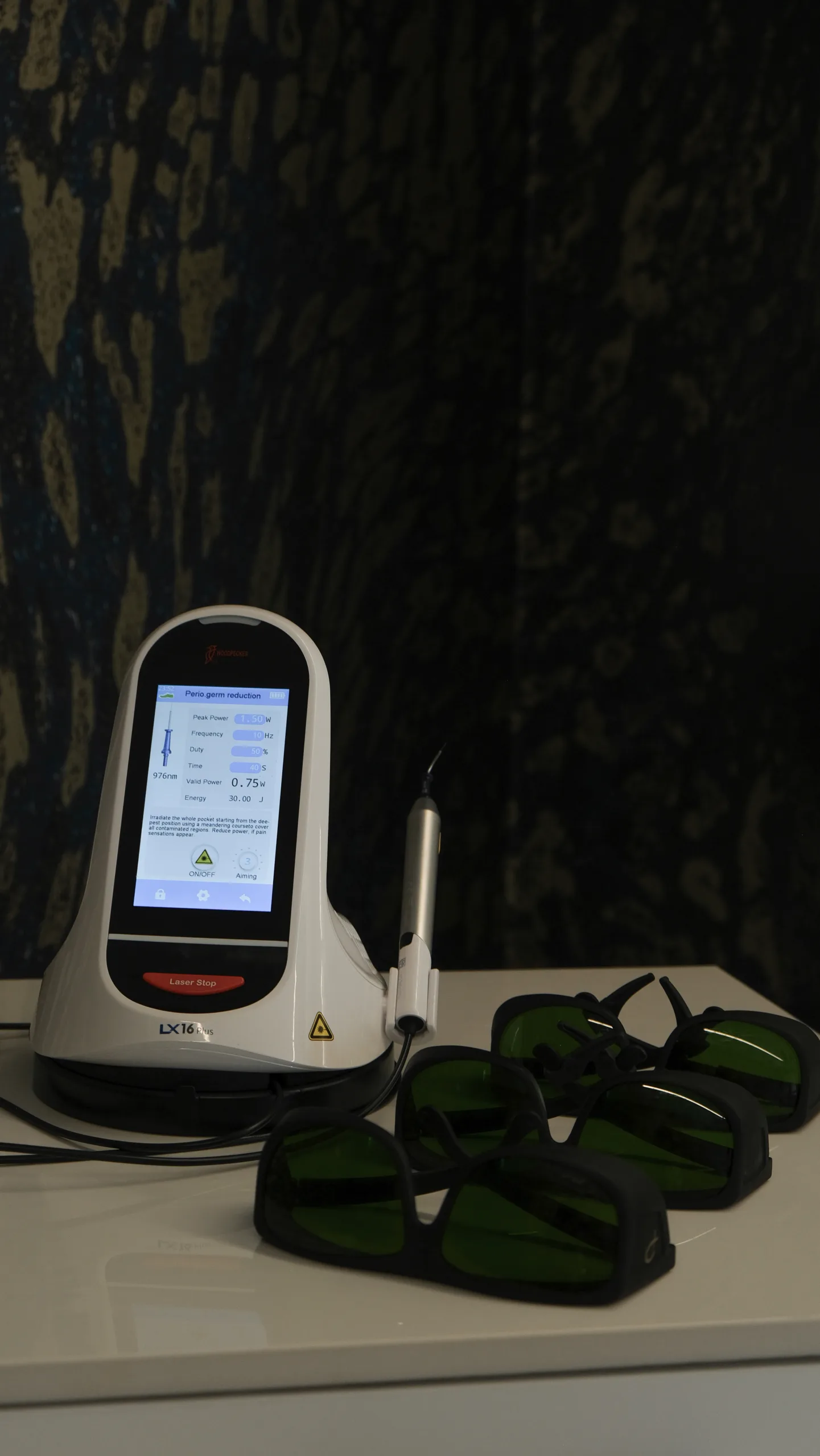
Not every dental laser works in the same way.
And not every tooth or tissue needs the same treatment.
For me, the value of laser technology lies in understanding these differences and knowing which instrument to choose.
At Yiannikos Centre for Holistic Dentistry in Nicosia and Limassol, Cyprus, we use Er: YAG, Nd: YAG and diode laser technologies for a range of dental procedures.
Dental lasers have been part of my clinical practice since 2000, changing the way I approach precision, tissue preservation and patient comfort.
Because advanced technology matters most when we know exactly why we are using it.
How Dental Lasers Work
A dental laser produces a concentrated beam of light at a specific wavelength.
Different wavelengths interact differently with water, pigments and biological tissues.
This allows us to select laser technology according to the treatment and the tissue involved.
Some lasers are used to prepare teeth and remove decay. Others are particularly useful for soft-tissue procedures, microbial reduction and photobiomodulation.
The aim is to use the right wavelength, energy and technique for the clinical task.
Precision begins with understanding how light interacts with tissue.
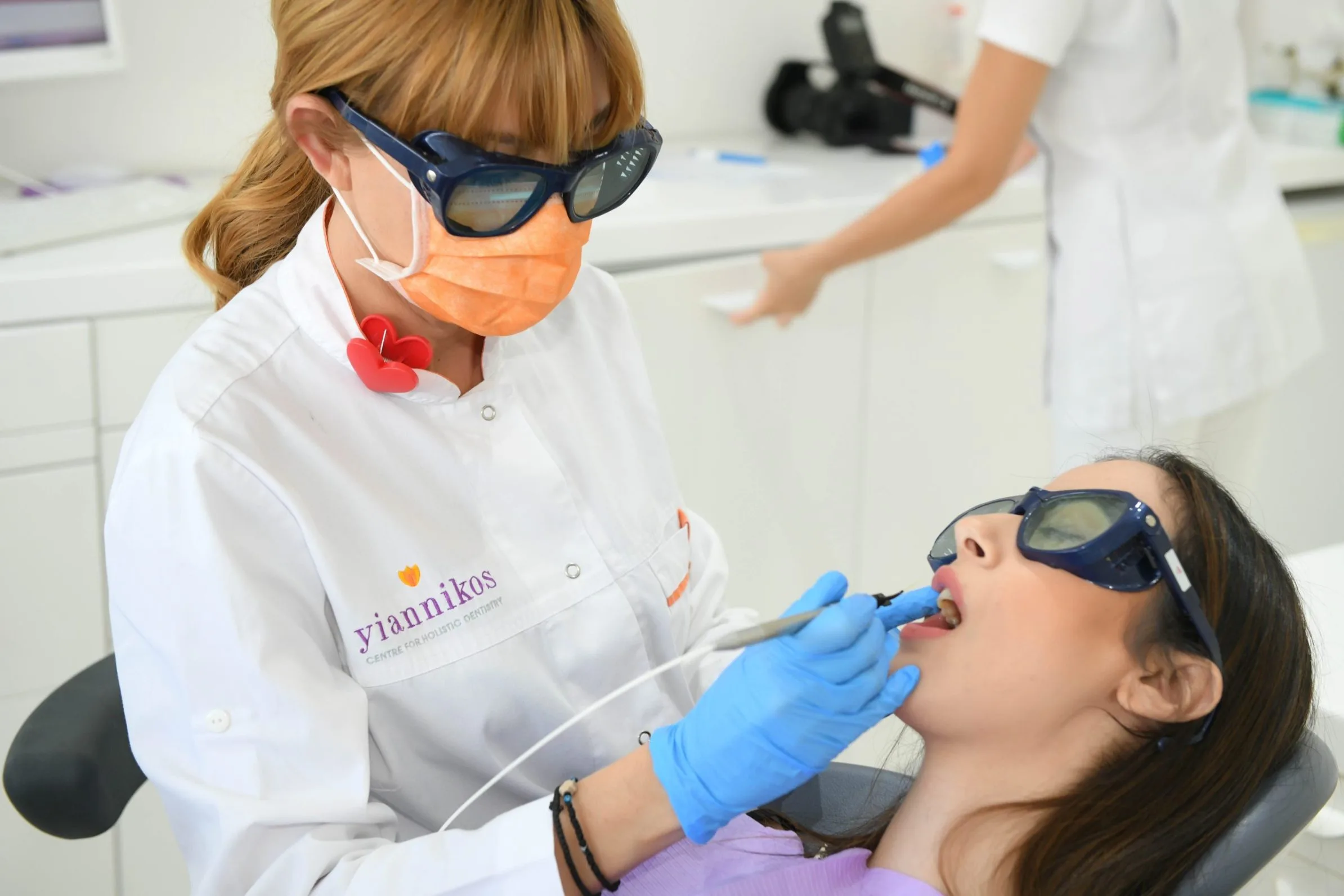
The Er:YAG laser is particularly valuable in restorative dentistry.
Its wavelength is strongly absorbed by water and hydroxyapatite, making it suitable for preparing dental hard tissues.
I use Er:YAG technology to remove tooth decay without the familiar rotating action and vibration of a conventional dental drill.
Many laser fillings can be completed without an injection.
The technology also supports a conservative approach to preserving healthy tooth structure.
At Yiannikos Centre, Er:YAG laser technology is available at our Nicosia clinic.
A different instrument can create a different dental experience.
Nd:YAG Laser Technology
The Nd:YAG laser has different interactions with oral tissues from the Er:YAG laser.
Its wavelength is absorbed by pigmented tissues and can be used for specific soft-tissue procedures, coagulation and microbial reduction.
At our Nicosia clinic, I incorporate Nd:YAG technology into periodontal treatment, selected surgical applications and disinfection of the extraction socket after tooth removal.
We also use Nd:YAG laser technology for photobiomodulation applications.
The choice of settings depends on the treatment and tissue involved.
Different wavelengths allow us to approach different clinical needs with greater precision.

Diode Laser Technology
Diode lasers are widely used in dentistry for applications involving oral soft tissues.
Depending on their wavelength and settings, they can assist with selected gum procedures, coagulation, microbial reduction and photobiomodulation.
At our Limassol clinic, we use diode laser technology as part of our dental treatment approach.
Its compact design and range of applications make it a useful instrument for everyday clinical care.
The purpose is always the same: to choose the technology that serves your treatment.
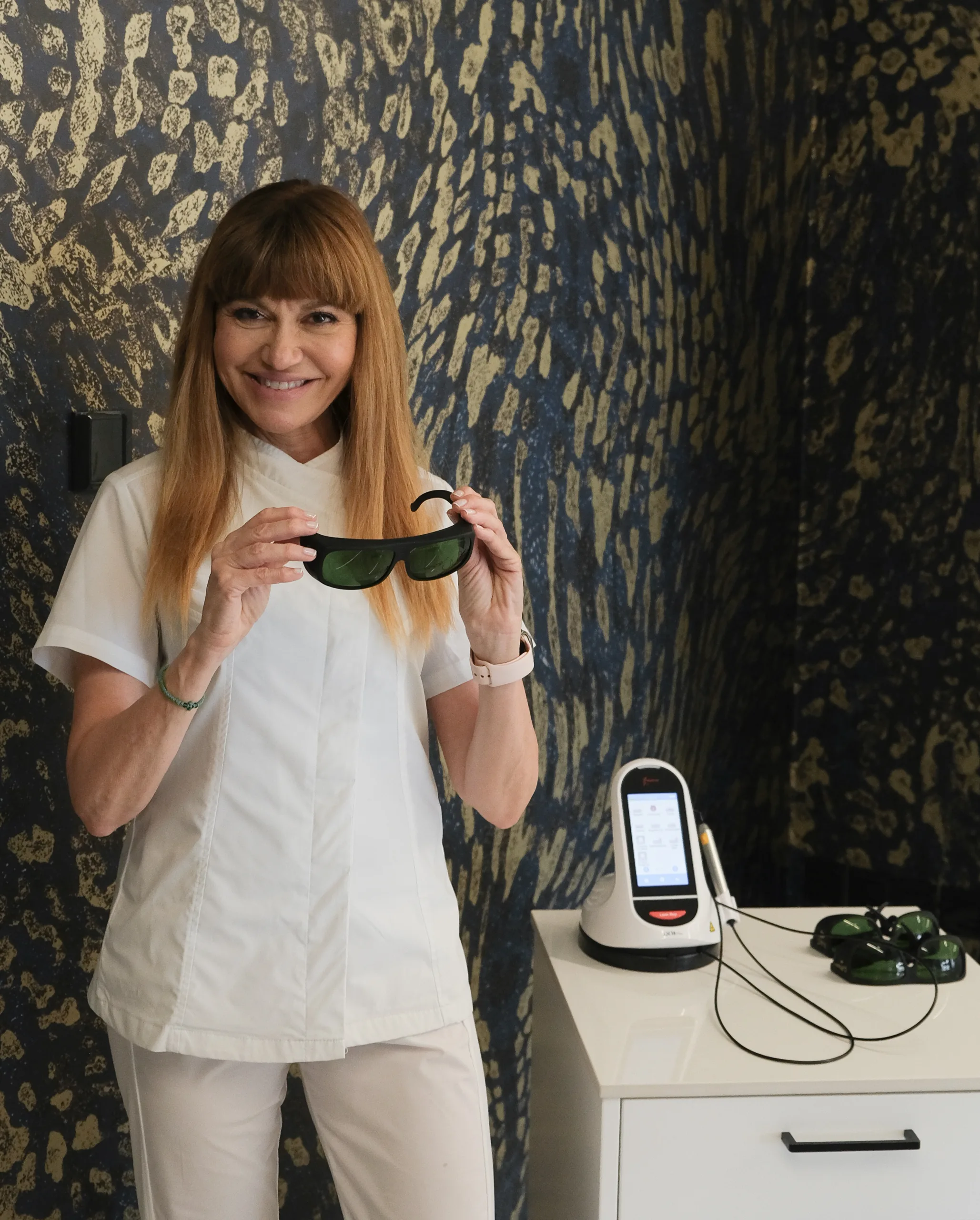
Laser Technology and Patient Comfort
For many patients, dental treatment is associated with the sound of a drill, the sensation of vibration or the thought of an injection.
Laser technology has changed many of these experiences.
With Er:YAG laser cavity preparation, we can treat many cavities without conventional drilling, often without local anaesthesia.
In soft-tissue dentistry, lasers can assist with precise tissue management and control of bleeding.
Photobiomodulation offers a non-invasive approach to supporting comfort and tissue recovery.
My aim is to combine effective treatment with an experience that respects your comfort.
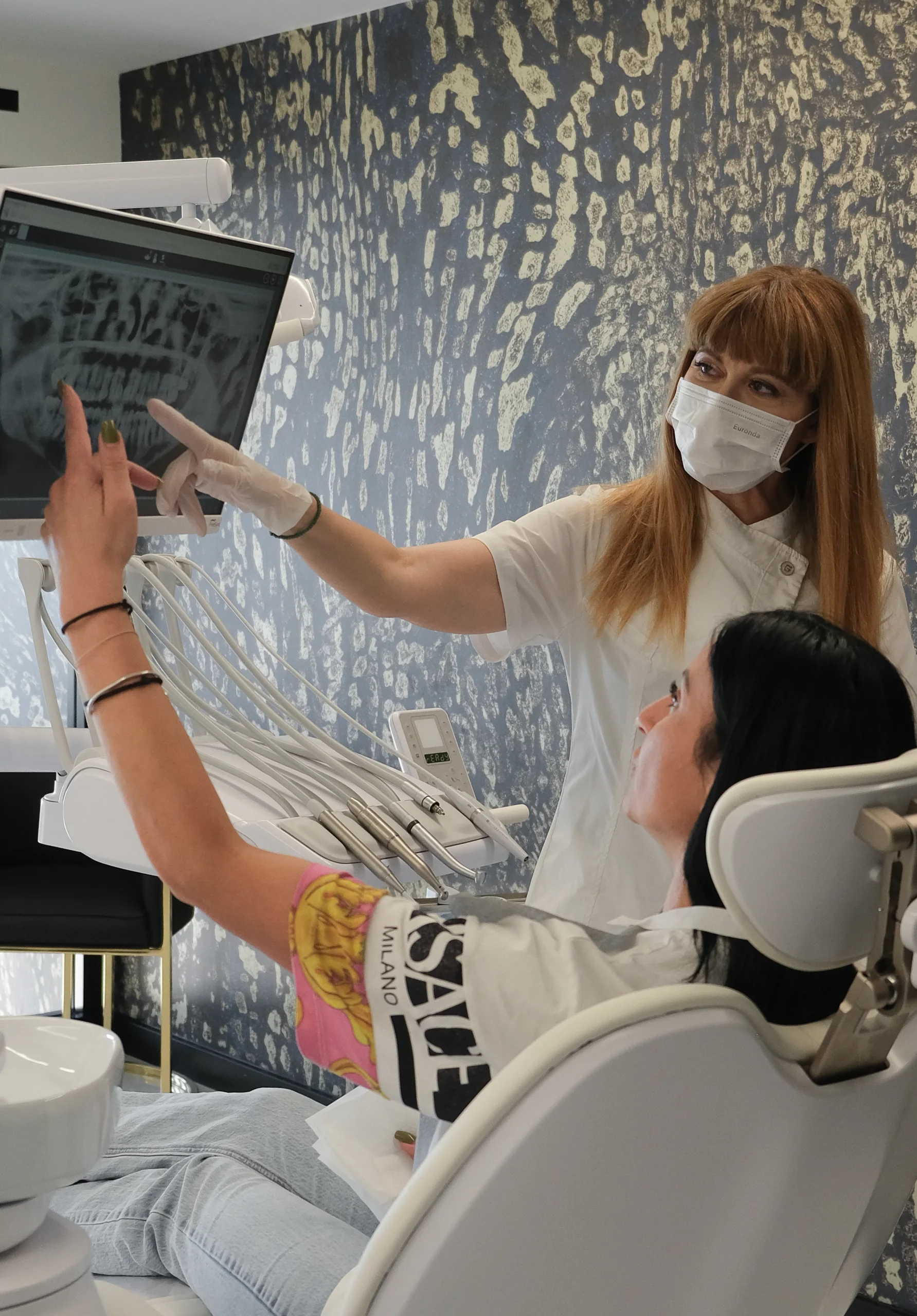
I began using dental lasers in clinical practice in 2000.
In 2006, I completed my MSc in Lasers in Dentistry at RWTH Aachen University, Germany.
That same year, I received the Golden Award for clinical research in dental lasers at the ISLD Congress in Berlin.
I also teach postgraduate laser dentistry at Sigmund Freud University in Vienna and serve as Cyprus’s official representative to the International Society for Laser Dentistry (ISLD).
These experiences have shaped the way I understand laser-tissue interactions, select treatment parameters and integrate laser technology into clinical dentistry.
For me, advanced technology is not about doing more. It is about treating with greater understanding.