
Tooth Extractions
Sometimes, Caring for a Tooth Means Knowing When to Let It Go
My first instinct is always to preserve your natural teeth. But sometimes, a tooth is too damaged to restore, an infection cannot be managed predictably, or a wisdom tooth is causing problems.
When extraction becomes the appropriate choice, I want you to understand why it is necessary, what will happen, and how we will care for you afterward.
At Yiannikos Centre for Holistic Dentistry in Nicosia and Limassol, Cyprus, we provide simple and surgical tooth extractions with careful planning, local anaesthesia and supportive techniques such as dental lasers and Platelet-Rich Fibrin (PRF) where appropriate.
Even when a tooth cannot be saved, the surrounding tissues still deserve our care.
When Is Tooth Extraction Necessary?-Preservation Comes First
Before recommending an extraction, I examine the tooth, surrounding bone, and gums.
Severe decay, fractures, advanced periodontal disease, or certain infections may make a tooth impossible to preserve.
Wisdom teeth may also require removal when they cause repeated infection, damage, or other clinical problems.
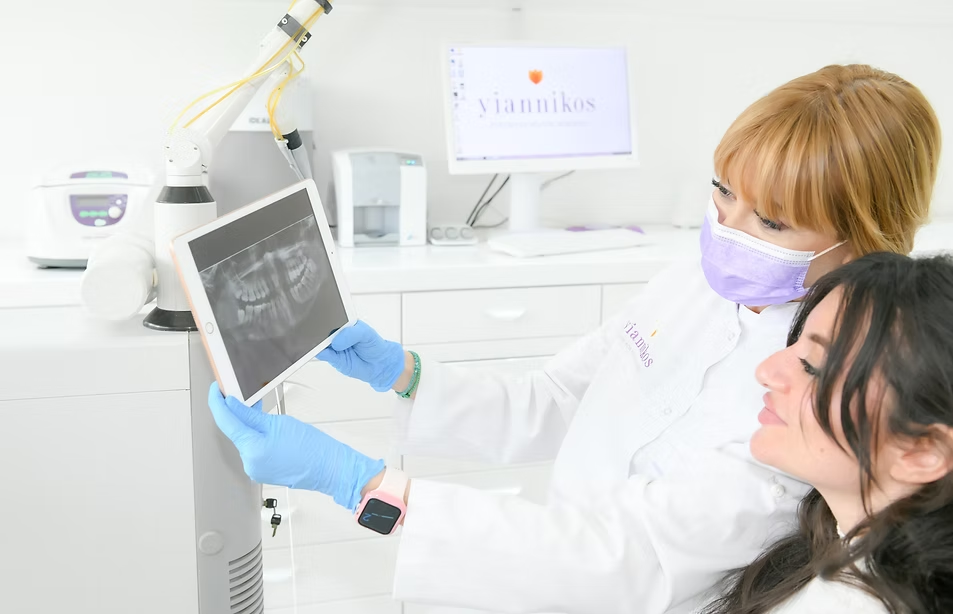
When appropriate, dental imaging helps us assess the roots and surrounding anatomy before treatment.
I want you to understand why a tooth needs to be removed before we make that decision together.

One of the first questions patients ask me is whether an extraction will hurt.
We begin with local anaesthesia to numb the treatment area and make the procedure as comfortable as possible.
I select the instruments and technique according to the tooth, its roots, and the surrounding tissues.
Some teeth can be removed with a simple extraction. Others require a surgical approach.
After removal, we assess the extraction socket and provide the appropriate care to support clot formation and healing.
Our aim is to remove the tooth while preserving the surrounding tissues.
Laser-Assisted Tooth Extractions-Technology with a Purpose
I’ve used dental lasers in my clinical practice for many years, and I hold an MSc in Lasers in Dentistry from RWTH Aachen University.
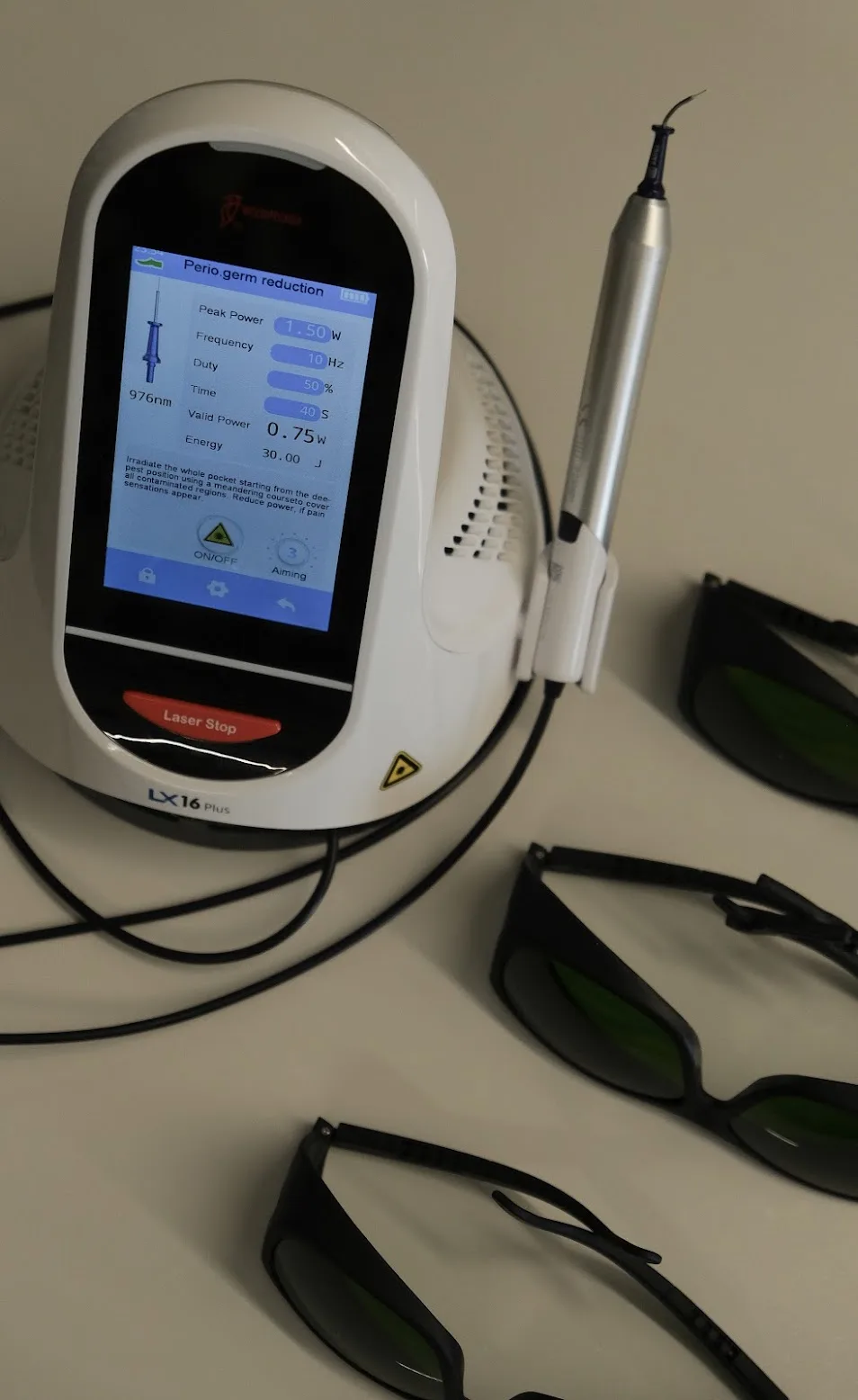
After a tooth is removed, we use laser technology mainly to disinfect the extraction socket. Where needed, I also use photobiomodulation to support healing.
At our Nicosia clinic, we use Er: YAG and Nd: YAG lasers. At our Limassol clinic, we use a diode laser.
Laser treatment complements careful surgical technique and conventional wound management.
For me, technology’s value lies in knowing when and why to use it.

Supporting Healing with PRF-Protecting the Socket as It Heals
After a tooth is removed, the body begins forming a blood clot that protects the extraction socket.
In selected cases, we use Platelet-Rich Fibrin (PRF), prepared from a small sample of your own blood.
PRF contains a fibrin network, platelets, and growth factors involved in tissue repair.
We may place it in the extraction socket to support local healing. Research, mainly on wisdom tooth removal, suggests PRF may help reduce postoperative pain and the risk of dry socket.
Caring for the extraction site is as important as the extraction itself.
After Your Tooth Extraction-The First Days Matter
Your recovery continues after you leave the clinic.
For the first 24 hours, protect the blood clot by avoiding vigorous rinsing, spitting, and drinking through a straw.
Choose soft, cool, or lukewarm foods such as yogurt, scrambled eggs, mashed vegetables, or non-hot soup.
Avoid smoking, strenuous exercise, and disturbing the extraction site during the initial healing period.
If local anaesthesia has been used, wait until the numbness wears off before chewing.
We provide instructions based on your procedure and explain when to contact us.
A few careful decisions at home can make an important difference to your recovery.