
Laser Frenectomy for Children
Sometimes, a small band of tissue beneath your child’s tongue or inside their lip can affect movement, oral function or dental development.
You may notice difficulty lifting the tongue, restricted movement, or concerns about the position of the front teeth. The important question is not simply how the frenulum looks, but how it affects your child. When treatment is needed, the way we perform it matters. We provide laser frenectomy for children and adolescents. We do not treat infants.
At Yiannikos Centre for Holistic Dentistry in Nicosia and Limassol, Cyprus, I use advanced laser technology to perform precise frenectomy procedures, with controlled tissue management, reduced bleeding during treatment and often no need for stitches.
My approach combines clinical experience in dental lasers since 2000 with careful attention to your child’s comfort and recovery. Even a small procedure deserves the same precision, experience, and care as every treatment.
Why Choose Laser Frenectomy?
When your child needs a frenectomy, laser technology offers practical advantages over traditional surgical instruments.
Instead of a conventional scalpel, I use controlled laser energy to release restrictive tissue.
Precise tissue treatment: Laser technology allows targeted removal or release of the frenulum while carefully protecting surrounding tissues.
Reduced bleeding: Laser energy can seal small blood vessels during treatment, helping maintain a clearer surgical field. This benefit is particularly noticeable with diode lasers.
Often no stitches: Many laser frenectomies can be completed without sutures, simplifying postoperative care.
Less postoperative discomfort: Some clinical studies report lower pain levels and reduced use of pain medication following laser frenectomy compared with conventional surgical techniques.
A short procedure: The laser application itself is generally brief, allowing us to focus on your child’s comfort, preparation, and recovery.
At our Nicosia clinic, I use Er laser technology, which allows precise soft-tissue treatment with limited thermal effects when appropriate settings are used.
At our Limassol clinic, I use a diode laser, which is particularly valuable for soft-tissue procedures and controlling bleeding.
For me, laser frenectomy is about combining precise surgical treatment with a more comfortable experience for your child.
When Can Laser Frenectomy Help?
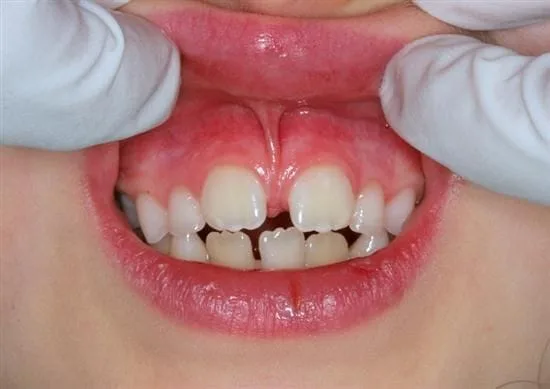
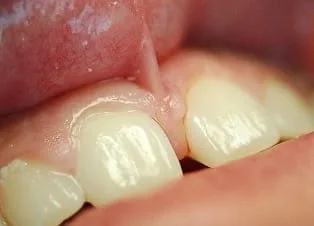
A restrictive frenulum can sometimes interfere with your child’s oral function or contribute to specific dental concerns.
During the assessment, I consider:
Tongue mobility: Difficulty lifting, extending or moving the tongue freely.
Speech-related difficulties: Restricted movement that may contribute to certain articulation problems, assessed alongside a speech and language therapist when appropriate.
Oral hygiene: Tissue attachments that interfere with cleaning or contribute to local irritation.
Gum health: Frenulum attachments that create tension on the gingival tissues or contribute to local periodontal problems.
Orthodontic concerns: Certain lip attachments associated with spacing or other dental conditions that may require coordinated orthodontic care.
When treatment is appropriate, releasing the restrictive tissue can improve its mobility and address the mechanical limitation.
My aim is to help your child achieve better oral function while respecting their natural development.
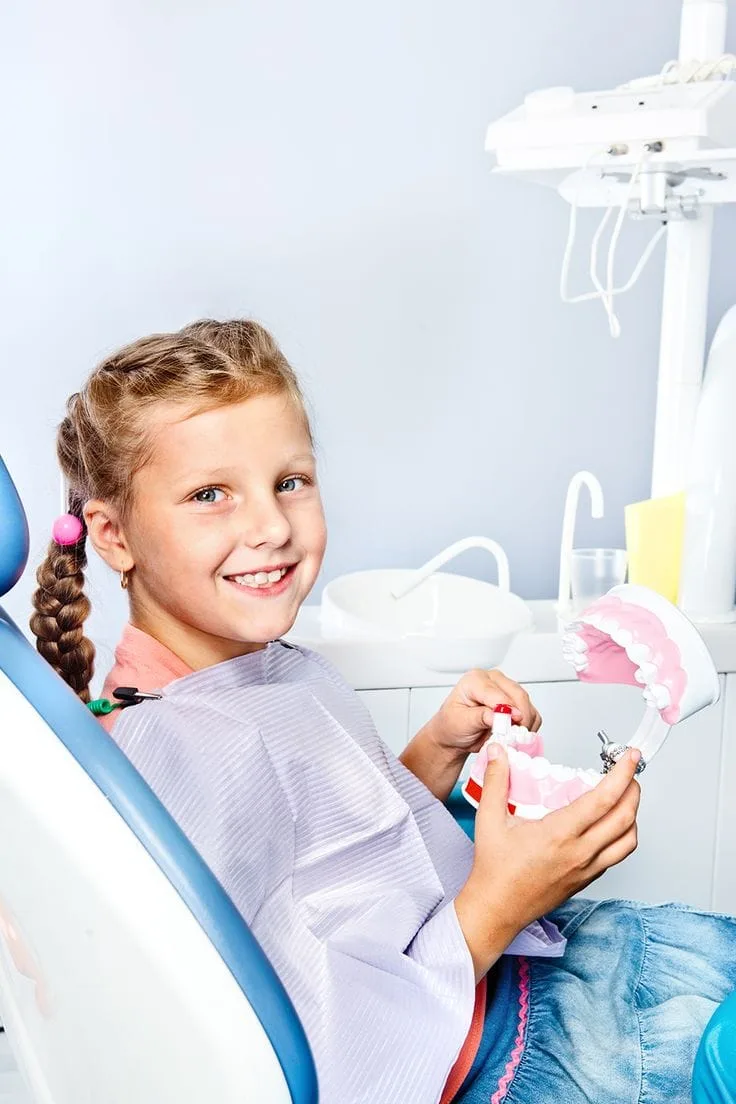
For a child, knowing what will happen can make an important difference.
I begin by examining the frenulum and explaining the findings to you.
We discuss the reason for treatment, the laser technique and the expected benefits.
During the procedure, I use the appropriate laser settings and anaesthesia to help maintain your child’s comfort.
Laser energy is applied precisely to the restrictive tissue, allowing its release without a conventional surgical blade.
Bleeding is often limited, and stitches are frequently unnecessary.
I explain the procedure in language appropriate to your child’s age and allow time for questions.
After treatment, we provide individual instructions for recovery and oral care.
I want your child to feel informed, comfortable and involved throughout the experience.
Healing After Laser Frenectomy
After treatment, the oral tissues begin their natural healing process.
Some temporary tenderness, mild swelling or sensitivity may occur during the first days.
Laser procedures often leave a wound that can be managed without sutures, although healing depends on the tissue treated and the technique used.
We explain which foods are most comfortable, how to keep the area clean and what to expect during recovery.
Follow-up appointments allow us to assess healing and review the original functional concern.
Where appropriate, speech and language therapy or orthodontic follow-up may form part of your child’s care.
For me, successful treatment includes both careful healing and meaningful improvement in your child’s oral function.
Experience Behind the Technology
Dental lasers have been part of my clinical practice since 2000, and I hold an MSc in Lasers in Dentistry from RWTH Aachen University.
For laser frenectomy, I use Er laser technology at our Nicosia clinic and diode laser technology at our Limassol clinic.
My experience guides the selection of laser wavelengths, treatment parameters and surgical techniques according to each child’s needs.
Technology becomes valuable when experience guides its use.